Every one imagined that the passion for tulips would last for ever…
– Charles Mackay
Furthermore, these rules give a significant advantage to highly talented people, since they can make much better use of the opportunities offered by luck (including the ability to exploit a good idea born in their brains).
– Talent vs Luck: the role of randomness in success and failure
I am eleven or twelve and at the age when I still need permission to go down and play. I hear my name hollered from outside, somewhere below. This happens often and I am not surprised. I go to the window and see a friend standing on the badminton court. He is asking me for coins. They will be returned very soon, he says. I walk away from the window and find some coins lying around. I place them in a plastic bag and walk back to the window. He is still there. I squeeze my hand through the grill and hurl the plastic bag out.
There was a sand playground beside the badminton court and in the afternoons you could see boys standing around, looking intently at the ground. One of them would be crouched and poised, with one arm stretched out, eyes on the prize, a few metres away, planted in the sand within the circumference of a circle carefully etched.
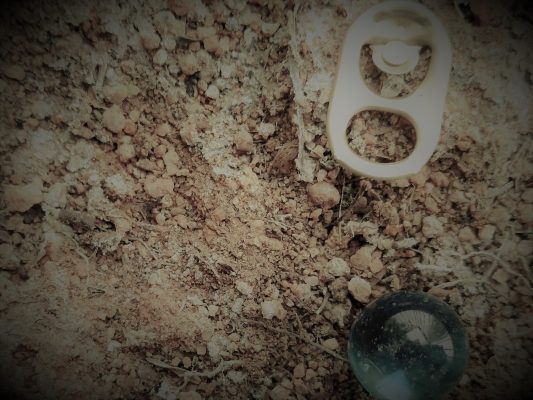
They would have been playing marbles. Each of them contributes a coin. A circle is drawn and the coins are embedded within. The objective was to use a marble to dislodge a coin. If the coin lands outside the circle, the thrower keeps it. There was one year, the coins were replaced with can tabs. Every game in all the playgrounds in the neighbourhood was played with can tabs. No one quite knew who made the decision to switch or when this decision had been made.
This went on for some time and one day a boy turned up with a bag of can tabs. He was told the game had changed and can tabs were no longer accepted for entry. True enough, just like that, every game, no matter in which playground, no longer accepted can tabs. He happened to turn up on the very day the rules had changed – unlucky.
Pluchino and others (2018) found through simulated modelling, that luck plays a very crucial role in determining the winners in the grand draw of life. In sum, they suggest talent and hard work are necessary but not sufficient conditions for high levels of success. They also found that the talented were luckier. Just as Gardner of The Theory of Multiple Intelligences, taught us that a gymnast is in every way as deserving of being called intelligent as someone who could solve word problems, Pluchino et al. (2018) defined talent in this context as, “any personal quality which enhances the chance to grab an opportunity”.
What exactly is luck? Is it the will of the heavens? Researchers say that an event X which results in good or is ipso facto good for a person Y, is said to be a lucky event if Y had little or no control and choice in its occurrence. There are different conceptions of luck, thin luck – undeserved good fortune, thick luck – when the outcome was unintended or could not have been brought about by choice, option luck – calculated risk payoff and brute luck – entirely circumstantial.
To recap, the following propositions have found scientific support:
a) Luck is the factor which assigns opportunities randomly to individuals who could not have or did not intend to place themselves in the right place at the right time.
b) Talented people have more opportunities and are therefore luckier.
c) Ability to recognise and grab opportunities is the necessary talent.
d) Luck elevates an individual with average raw ability and other necessary characteristics to levels of success much higher than someone who starts out with a high level of raw ability.
e) It is possible to become luckier.
Since luck and opportunity seem inextricable, the natural question is: What constitutes an opportunity? The plain and ordinary meanings are as follow, a situation or condition favourable for success or a good position (dictionary.com).
The story of Italian artist Giotto di Bondone (1276-1337) illuminates why luck appears to place the talented (raw ability and ability to recognise opportunities) in favourable situations more often.
Giotto was born into a peasant family in Vespignano, Florence. He spent long hours etching drawings on rock while he was out tending sheep upon the hillside. One day, the great master artist Cimabue, who was renowned because of his rendition of Madonna and Child, happened to be journeying through the countryside and happened to spot Giotto and a drawing on a rock which the latter had created. Cimabue was greatly impressed and invited Giotto to become his apprentice “for he saw that the boy had a wonderful power in his little rough hands” (Knights of Art).
Giotto found himself in a favourable situation because he had spent countless hours practising by himself with stones, he found lying around him. This is how talent (raw ability) is nurtured. However, if Cimabue, had never spotted him, he may never have learnt from a great master to fully come into his own. Giotto was in a good position because he had honed his skills enough to have caught a master’s eye and himself had the eyes to recognise the size of opportunity before him. Of course, it helped in no small degree that both Cimabue and Giotto lived in Florence which has been described as the “Cradle of Renaissance”. Collectively, this was luck at work.
It bears repeating that today’s environment is one of flux. While we cannot say for certain what it would definitely look like, we see the general direction. What was once of value is becoming less of value and may mean something very different from what it once used to mean. When all begin chasing what once was of value in an environment which repeatedly signals in its own ways, a redefining of values, bubbles form.
Should students of today continue chasing grades because once upon a time grades appeared to be the be all and end all? Is it true that today’s environment favours the already well-resourced? Raw ability follows a gaussian distribution (Pulchino et al. 2018) which means it is unlikely to find it concentrated along SES lines and indeed it was found that the most talented are seldom also the most financially successful. Luck as we have seen is blind to SES.
As the research shows, the race seldom goes to the swiftest and strongest but to those who find themselves in the right place at the right time. In fact, the advice given by Pluchino et al. (2018) for individuals is this. “the best strategy to increase the probability of success (at any talent level) is to broaden personal activity, the production of ideas, the communication with other people, seeking for diversity and mutual enrichment”.They add that “the highest probability of lucky events” accrues to “an open-minded person, ready to be in contact with others”.
A McKinsey report on the future of work, says “the skills and capabilities required will also shift, requiring more social and emotional skills and more advanced cognitive abilities, such as logical reasoning and creativity”. This report is by the way available free of charge for anyone interested.
The fixation on grades assumes that grades are the keys to the kingdom, that employers look for grades, that qualifying for a traditional role is the only way to become happy, fulfilled and materially prosperous.
Once upon a time, an author had to go through a publisher and was dependent. Now technology allows anyone to self-publish. Aspiring authors are no longer subject to a publisher’s understanding of what the market wants. They can take that chance themselves at low cost.
Once upon a time, people could only learn in a physical classroom from a teacher. Now anyone can learn almost anything themselves if they are so inclined. How do resources help in this endeavour? Resources pay for professional feedback on progress. Timely feedback on progress is of course essential for learning.
There are however, many cost-efficient ways to obtain accurate feedback. The market is a good teacher. For example, someone could hone basketball skills in a structured way with a coach or learn through the school of hard knocks on the neighbourhood court. The neighbourhood court is a shared resource and teams adopt a winners-stay system. The only way to continue playing is to get better at the game. If someone develops enough stamina and skills, it is actually likely that this person might outshine a formally ‘trained’ player. This might be oversimplification but the larger point is, resources are useful but one could make up with resourcefulness what one lacks in resources. The 21st century has democratised opportunity – think YouTube stars.
Sometime later, I leave the house to run an errand. As I walk past the playground, my friend walks over to me and hands over the plastic bag with my coins. He has his hands full.
The Brain Dojo