Is a fireman who rushes into a burning house courageous? Is a lifeguard who jumps into a swimming pool to save a drowning child courageous?
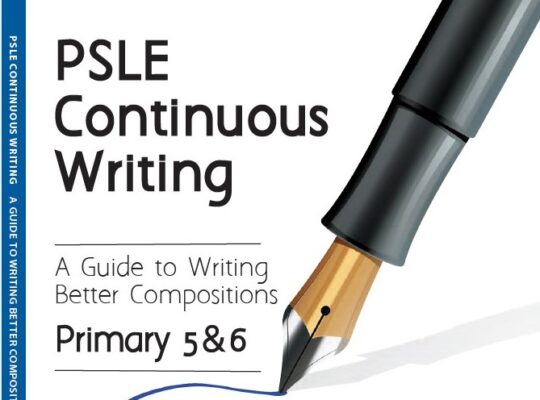
– PSLE Continuous Writing, A Guide to Writing Better Compositions, Primary 5 & 6
Task requirements set the boundaries for what would be considered as relevant content for purpose, audience and context … students should be equipped with the necessary writing skills to craft their personal writing to relevantly address the theme in order to yield the intended effect on the reader.
– What to Value in Students’ Writing at the Primary Levels
In What to Value in Students’ Writing at the Primary Levels, an essay in an SEAB publication on assessment, the writer distinguishes between two equally essential aspects of the Continuous Writing task at the upper primary level. First, she explains that the theme must be relevantly and sufficiently addressed. Second, she says writing skills cannot be neglected.
She emphasises that “prescribing task requirements” which in this case relates to the theme (found in bold letters at the top of task sheets; A Kind Act for example) “is critical in upholding the integrity of the examinations” to among other things, “deter students from recalling memorised essays”.
Writing is an act of expression and allows one to be themselves in engaging the world. It is a powerful way to develop a unique identity. No matter how effective, a template removes the therapeutic effect of original writing and could work to reinforce self-perception of some inadequacy.
A template could be what has worked in the past. If circumstances changed such that the same factors which held true no longer do, a template would lose relevance and someone else would have to come up with a new solution.
Also, at a more practical level, all writing is relational and is intended for connection with a specific audience. So, students are taught to consider purpose, audience, context and culture before deciding format, structure and word choices. No matter how effective, a template might seem remote and devoid of human connection to a reader, if it is recognised as such. This template would then begin to lose its effectiveness with readers if human connection and personal touch is a necessary ingredient of the interaction between writer and reader. This is a generalisation but would certainly apply particularly to works of art.
One example of a new, creative, writing solution to a real-world problem was tried with some success in Ashland, Oregon. Ashland is situated close to a forest. It was not uncommon to see deer in the town. Residents co-existed with deer until some of them began to view the deer as a nuisance and began asking for their culling. One person who did not wish to see this happen, a man named John Yunker decided to write a letter for publication in Sneak Preview, “a widely read Ashland periodical” (Yunker, Giving animals a voice: Letters from an Ashland deer). His letter was neither confrontational nor accusatory but or perhaps therefore, rather effective in achieving his purpose with his target audience. There was a twist. He did not write the letter in his own name. He wrote as an Ashland deer and signed off as An Ashland deer.
If Mr John Yunker had followed existing templates to make his case, he may not have been as successful. Therefore, understanding task requirements and coming up with a unique solution would be a useful real-world skill.
The writer of the essay in the SEAB publication mentioned two aspects of writing which is effective in meeting its purpose on an intended audience; understanding task requirements and writing skills.
We can touch briefly on the second aspect; writing skills. Students can acquire writing skills through reading. This happens quite naturally. The logic is input equals output. What may not be as effective is hearing how to write well. To understand the other way students can learn to write better, we can refer to the analogy of pottery. We can watch someone shape a pot or hear about how to shape a pot well, but that may not help us shape our own pot. What would work is to be guided as we shape the pot. Likewise, writing can be shaped with guided practice and detailed feedback to individual work.
Even students who have mastered the mechanics of writing may not know exactly how to meet task requirements which in this case includes the theme. To help students analyse themes to meet task requirements, this tutor has written a book, PSLE Continuous Writing, A Guide to Writing Better Compositions, Primary 5 & 6.
The book explains the task requirements in some detail in Section A. It touches on Word Count, Theme, Pictures, Guiding Questions and Other Relevant Points. Each of these is a part of the Continuous Writing task sheet. Section B teaches students exactly how to analyse a theme with the 5-Keys Approach. The example used is for the theme, “Courage”. Section C allows students to practise 5 Keys on 30 different themes. Students may not know if they have analysed a theme correctly. To provide guidance, Section D contains write-ups on all 30 themes along with worked examples of how a completed 5-Keys Chart (or completed theme analysis) for a given theme could look like.
To fulfil task or thematic requirements, students must be able to analyse the difference between conceptually close themes such as dishonesty – lies, carelessness – recklessness and prize-present. Apart from being able to distinguish the conceptual differences, it would be beneficial for them to generate insight on themes. Systematic theme analysis would help them do both.
The system described in the book would be useful for conceptual clarification even at the secondary school levels.
If a student does theme analysis and ensures that the story written is based on the content from such analysis, there would be less need to worry that the story has gone out-of-point.
To begin writing better compositions …
The Brain Dojo