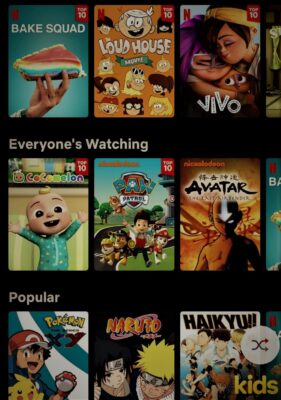
Studies investigating the contribution of entertaining media …showed positive relations between extramural English entertainment media exposure and English Vocabulary knowledge.
– Explaining Individual Differences in young English learners’ vocabulary knowledge: The role of Extramural English Exposure and motivation
… motivation would be more involved than ability in informal contexts, because motivation determines if the individual takes part in informal contexts.
– Motivation In Second Language Acquisition – Gardners Socio-Educational Model
Learning a language has two basic parts. The first is to be able to name objects and concepts. As mentioned elsewhere, one of the first word forms very young children learn is nouns which are names of people, places and things. The second is to be able to string words together in a manner which makes sense.
Being able to name something has to do with vocabulary. Vocabulary is the range of terms available in a language for expression. Words comprise two types. These are content words and function words. Content words have meaning in and of themselves and function words fulfil a grammatical function to allow words to fit together. An example of a function word is “to”.
In primary school tests, vocabulary in the sense of content words is tested in the following components: Vocabulary MCQ, Vocabulary Cloze (MCQ), Synthesis (being able to transform word classes with suffixes), Comprehension Cloze, Editing, Comprehension Open-Ended, Situational Writing, Continuous Writing, Listening Comprehension (match what you hear to the correct option in the answer booklet) and Stimulus Based Conversations in Oral exams.
To the extent that even an adult who has had no experience whatsoever with a language would be completely clueless about how to even begin answering a Primary 1 exam paper in that language, every single component requires knowledge of vocabulary.
However, the aforementioned components test vocabulary in the sense that words which are not encountered very often would appear. Students’ ability to know or at least form a working definition of such words would determine their performance in those components.
So, vocabulary is an integral part of doing well in English examinations.
At the lower primary levels, there will be a great degree of correspondence between what is taught and what is tested. Typically, the lower primary students would be introduced to a big book so they can learn vocabulary in context. They may receive spelling lists to memorise so they are able to use such words in their writing. When they are tested on language use, the vocabulary questions which appear would be those which they were already introduced to. To this extent, lower primary students can rely on a formal process to acquire new vocabulary for the purposes of examinations.
This changes at the upper primary levels where the range of words which students are expected to know increases disproportionately with what can be covered in a classroom. Though vocabulary is appreciated and rewarded handsomely especially in writing, a teacher would never spend an entire lesson reading off a list of words and telling students the meanings of such words. There is good reason for this.
Apart from being life-sapping, doing so goes against well-established pedagogical principles and the learning science such principles are based on.
For instance, the working memory can only hold so much knowledge at any one time.
Secondly, without some meaningful engagement which means students are involved in production, the threshold level of motivation would not be met for students to deploy sufficient attentional resources. For example, Bowman (2021) in Learning How to Learn, talks about how over the ages, people have always learnt best through craft. Bowman gives two examples. He refers to Adamson (2020) who pointed out that the assembly line, led to many workers quitting the carmaker Ford because “massively deskilling the process of assembly, the intrinsic impulse of craftsmanship was eviscerated”. Current technological trends are in response to this. Repetitive labour is being relegated to machines even in knowledge industries so that humans can do what they would be motivated to do, which is to create. The other example he gives is that mentioned by Mehta and Fine (2019) who showed how students in American high schools were most engaged and learned best through, “all-consuming extra-curricular activities” which process “mirrors key aspects of learning how to learn through craftsmanship”. Examples of such activities included, “drama production, debate, school newspaper, and school yearbook”.
Thirdly, even if students willed themselves to be attentive and had prodigious memories, word lists do not equip them to be able to use words so learned in appropriate contexts.
How then, do we solve the problem of having to use in exams what is not taught in class? In This Land is Mine, we see Dennis Chiang enjoying Agatha Christie novels before he calls it a night. This was his equivalent of television today for some. Reading serves the purposes of vocabulary acquisition best. However, for Dennis Chiang, the Agatha Christie novel was entertainment. He was not reading for the purposes of strengthening his vocabulary. His motivation or reason for reading was entertainment. The book helped him unwind. Indeed, Lovato (2011) explains that the students who are motivated are the ones who would engage with a language outside of prescribed or mandatory periods.
Entertainment is a powerful motivator and students now have access to multiple channels of entertainment. These include YouTube, Netflix and computer games. Students may prefer these to books. This is even though the book version of blockbusters is almost always richer, more engaging and intricate. Consider for example, Michael Crichton’s Jurassic Park or Lost World. The same can be said, as engaging as This Land is Mine is, of The Devil’s Circle. For one thing, it takes time which upper primary students may not have to read for leisure. Secondly, pictures might seem more attractive than words.
Thankfully, unlike say Science or Math, language is a medium. Regardless of what the domain is, students are likely to have contact with language. Nicholas Nassim Taleb asked in one of his books why the same person who would work out in the hotel gym would ask a porter to carry his luggage. If students begin to look out for words and ways of expression in the entertainment they consume, they are learning vocabulary consciously; otherwise, they are still learning, subconsciously.
Leona and others (2020) explored the role of what happens outside the classroom in primary school students’ vocabulary acquisition. They found that students with greater exposure to English outside of class for entertainment and in conversations with family and friends had better vocabulary.
So, entertainment has a twofold purpose at least with regards to vocabulary. Some students are more visual learners than they are auditory and for them, English subtitles will be very useful when they are watching shows to acquire new vocabulary.
A show of good language can lead to a show of good language.
The Brain Dojo